The North Park Student Newspaper Since 2023
Is success built on luck or skills and effort
OPINION/EDITORIALS
Salyan Brijesh
6/11/20263 min read
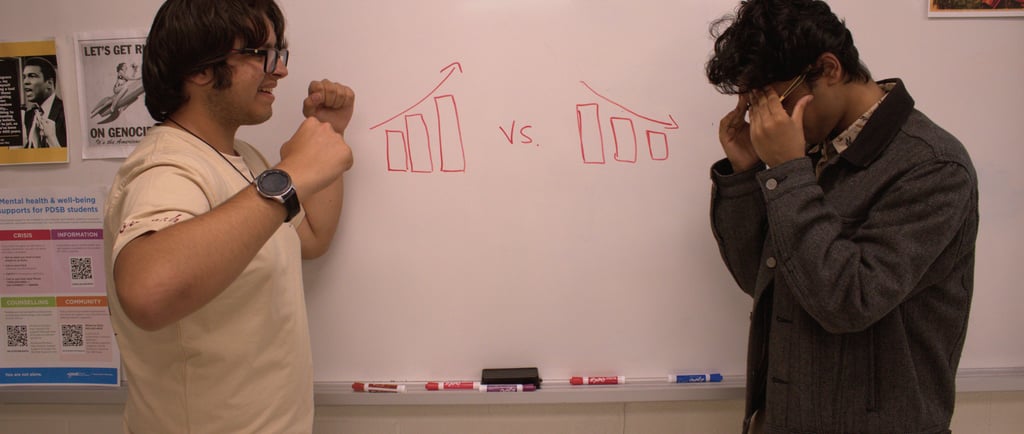
To begin with, it goes without saying that both luck and skills are involved. Success cannot exist without opportunities that are provided by luck, and opportunities cannot be capitalized upon without skill. However, one can easily increase the chances of opportunities arising using skill and hard work. Conversely, luck itself can seize opportunities with minimal effort. These two factors are incredibly intertwined, which is why this debate is so difficult in the first place.
To say that success is entirely dependent on luck would be rather depressing and pessimistic. It can also be viewed as a coping mechanism because devaluing hard work to protect one’s feelings is only natural. Imagine training for years to participate in the boxing Olympics, only to lose to a player who you know has trained for less time in the ring. Perhaps your opponent had a degree in psychology, and that explains why they read your movements better. You did not consider that they have spent more time studying the mind of the opponent, just not in an official way. Psychology could also have nothing to do with it, and you simply made the wrong reads. Success in sports often plays into both luck and skill; however, I would argue that skill is the major factor here because your training puts you in a position where you could stand in the ring against your opponent. In other words, effort raises the chance of success. This fact cannot be disputed, and most high-level sports are based on predictions and mental strategies. Ergo, it is my belief that once an invisible effort threshold has been met, top-tier sports turn into a glorified game of poker. This explains some of the greatest upsets of all time, such as the “Miracle on Ice." Of course, the theory does not apply to sports of pure athleticism in which an opponent is not directly opposing, such as shot put or the long jump.
But let’s take a look at another form of success: financial freedom. Making money is perhaps the ultimate goal of life, and many small businesses have been financially ruined when they underanalyze the market. Albeit this may also be attributed to the unpredictable nature of said market. ~21% of businesses in Canada close after their first year, and ~48% by the fifth year. Now, I am going to make the claim that businesses are mostly successful due to skill; however, the argument is close because can one really make the claim that all 48% of those business owners lacked skill? When becoming an entrepreneur, people are forced to become meticulous in their planning, and so any controllable variable will be controlled, and any uncontrollable variables are much more likely to have an impact. Small aspects can have significant impacts, such as the color of a sign, the font, and the pure chance that a customer is in need of a particular good/service. These are the uncontrollable parts of whether a customer steps into business A or business B. The hypercompetitive market gives customers too many options, and this is why extremely overdone business ideas struggle. If a business is based on an overmilked concept, luck plays a greater part; however, skill still comes out on top here because truly unique concepts will succeed. The analysis of the market, the classic business trends, and calculus models are also ways to put effort into a business, and these methods can predict the market with absurd accuracy. Analysis is a powerful tool for a business owner if enough foresight is considered. After all, more than 50% of business owners succeed after 5 years, and Canadian statistics are some of the worst entrepreneurial success rates in the world. The 48% can also be tied to inflation and a lack of regional data to access. Overall, I would rate the luck to skill ratio for a business as 30 to 70.
In conclusion, success is mostly skill; however, the particular context determines how skill should be utilized and how much of an impact luck inevitably has.