The North Park Student Newspaper Since 2023
Morality can exist without religion
DUELLING EDITORIALS
Maireen
4/9/20263 min read
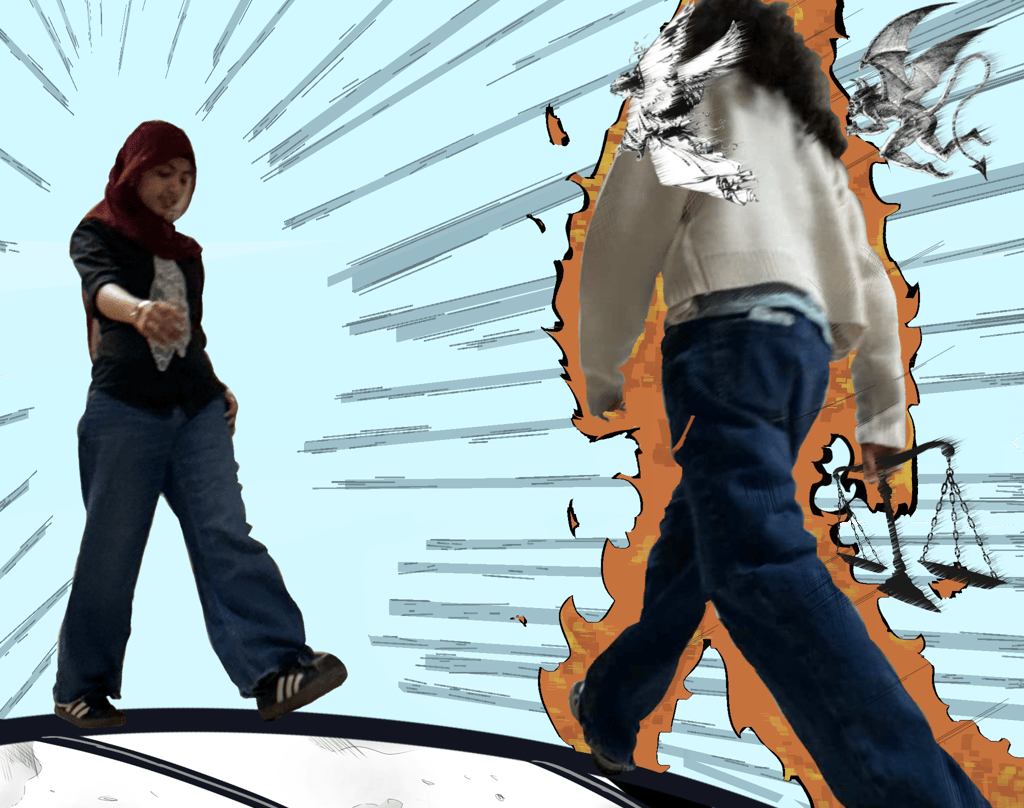
Morality can and does exist without religion, in fact, more so without the presence of theism altogether. I hope that statement enraged you just a little. Religion is quite the slippery slope, and I understand that it’s important to a lot of the student body here, but I also understand that religion is infamous for clouding the thoughts of the masses. I don’t come here to hate or to judge, but to enlighten and hopefully sway some opinions.
You know what’s interesting? I’ve encountered numerous people who deem religion as the peak of morality saying something along the lines of, “we humans can’t correctly judge what is right or wrong, so we let a higher deity decide for us,” almost implying that it’s the more “objective” path to approach morals. I suppose this logic can be used as a hyperbole, but any degree of such a belief is invalid. Morals are not objective; they’re more-so “acceptable”. At their most basic, they are beliefs that benefit people without causing harm. Social and physical survival, if you will. They are constructed for us, by us. Now, with this in mind, isn’t it intriguing how we then create a higher being based on our own ideas of what is “good” and then consider this to be the objective truth? Ultimately, trying to define a subjective concept through objective means is a dead end. In other words, trying to say morality exists because of —or as some say, reach the pinnacle of itself— due to religion is a fruitless endeavour.
The Epstein Files are a great example of my point. Me bringing this up is probably jarring, whether minimally or otherwise. Something I found notable about the responses to this, of which there were many, is that though everyone can agree it was inhumane and satanic, there’s a group who quite literally thinks that. If you go down the same rabbit hole I did, you’ll notice a fair amount of Christian social media influencers claim that “this isn’t about left or right, it’s about Jesus and Satan”, as Nate Fagen said on Instagram. Now, pardon me for using anecdotal evidence, but I think it’s an interesting case. Him and other creators put the blame on “Satan,” talking about rituals, sacrifices and demonic tendencies in the files. This is quite the ignorant take on the whole situation because Satan didn’t create hell on earth; ironically, humans did. It’s understandable for people to use sentiments like this to cope with the release of the Epstein files. Nonetheless, at the end of the day, watering down what these children went through into a religious dilemma is just belittling and immoral. This group will then go out of their way to defend Trump—even though he was practically in bed with Epstein throughout—by saying, “Satan did it, actually.” This is exactly what politicians like Trump who use religion as a shield want: to change direction, to shift blame, to confuse. Everything is political, even religion. However, as Phil Zuckerman states better than I could, “In reality, there's nothing divine or otherworldly about genocide. It is, rather, an unfortunate result of our own natural predilections.”
Allow me to emphasize Zuckerman’s quote a bit more. Historically, both those with undying devotion to an otherworldly deity and those with godless lives have committed heinous acts. Neither groups are exempt. What they both share in common, however, is justification of their own hubris to the point of being grossly unethical— or more specific to context, “an unfortunate result of our own natural predilections.” Witch hunts in the 1500s were committed by blatantly immoral religious groups in the name of god and fear, but Jeffery Dahmer didn’t dismember people because god told him to. All this is to say that immoral theistic people exist, good anti-theist people exist, and vice versa. Who’s to conclude that morality is based on theism?
Ultimately, the question of whether or not morality exists separately from religion can become a paradox of what came first: the chicken or the egg? Religion or morality? You can’t prove or disprove either, so getting lost in these kinds of obscure labyrinths of paradoxes is easy. I should know, I have been stuck in that very labyrinth in pursuit of this article. But I believe it’s an important idea to explore at least once. Religion undoubtedly influences a lot of people, that I am not trying to deny, but that doesn’t mean it consumes the entirety of people’s moral decision making. We live in a crazy world with crazy people, and religion helps many of us deflect that. In spite of that, morals—at their core—are a secular concept because when you face the “save your mom or your lover”-esque predicament, no god will whisper in your ear; your moral compass will.