The North Park Student Newspaper Since 2023
Morality cannot exist without religion
DUELLING EDITORIALS
Hirman Inayat
4/9/20263 min read
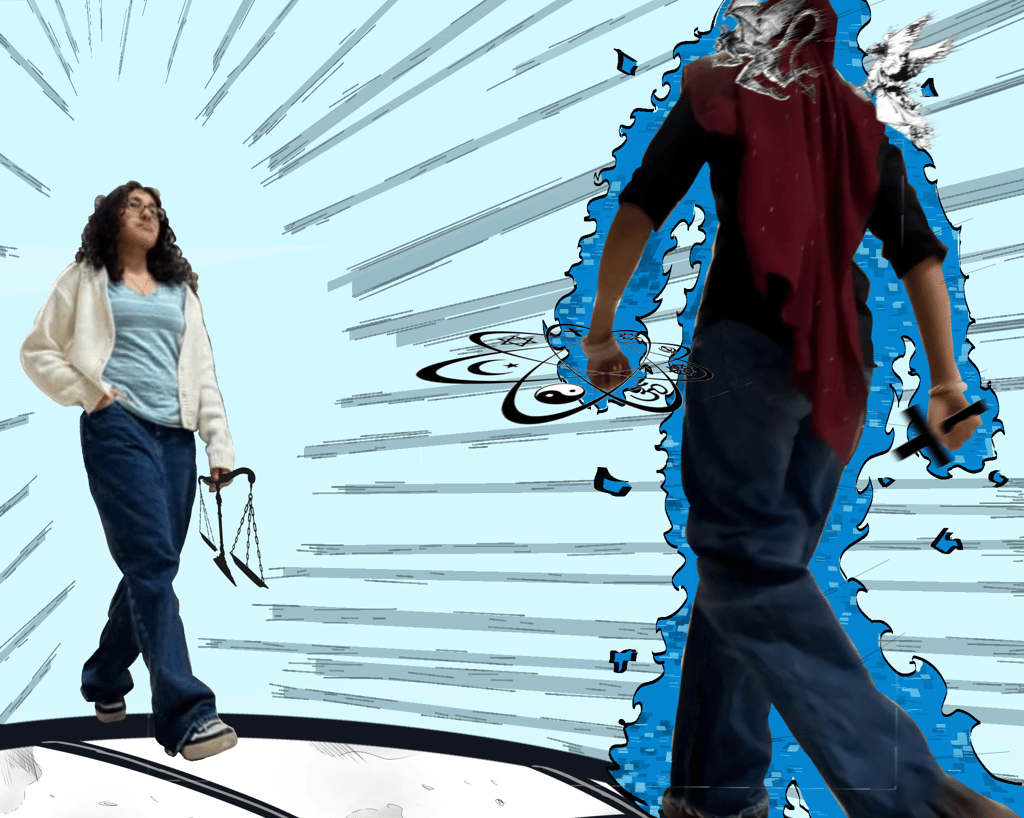

There’s this saying about religion and morals by H.L. Mencken: “Morality is doing right, no matter what you are told. Religion is doing what you are told, no matter what is right.” Which comes with the thought that morality is an independent system of principles influenced by nothing around you. But is that even true? Should it be so easily believed that one's morality came into existence without the backing of religion or even what has been told to them by others? What a foolish statement.
One tiresomely long debate that will always remain is about nurture over nature and the idea that human behavior is primarily and exclusively driven by survival instinct. Should the idea be proven true, the claim that everything is done with a deep-rooted selfish desire to survive no matter the cost, if this ideology is indulged the way it is, it’s easy to argue that with the “natural instinct” to live and reproduce, how did morality come along the way? How was it just created? Can you so easily believe someone just up and decided, "Oh no, killing? That’s so rude of me; I must stop!” Or was there something else at play? The more ‘civilized’ humans became, the more they created these deities and higher-ups to control the masses into this sense of being better, that acting a certain way brought them hidden rewards and would help them profit even after they had left the earth.
Many believers, or theists, construct their lives around these morals, this idea of what's good and bad, based on this reward system. The sinners go to hell; the saints go to heaven. Should you act ethically and righteously, you’ll make it in life unlike those who don’t. For example, in Islam, smiling alone is a Sunnah (tradition) carried by the Prophet (PBUH) and explicitly considered a form of Sudakah (charity), which is considered a virtue or a good deed. In Christianity, feeding the hungry or visiting the sick is considered a good deed; in both cases, they are seen as charity and praised for. Many sayings or beliefs in religion outline morals that are seen as humanity in society; they create this system for many to believe will somehow reward them. This sense of what is right and wrong, good and bad, what should be done and what should be avoided. More than half of the population—a tremendous 8.6 billion people—are believers of some sort of religion, basing their morals off of the good and bad written in their books or told in their stories.
Over 85% of the world is religious or has some sort of belief in some higher power they follow. Just because of that alone, religious influences are seen heavily in media, the economy, and even politics. So many of today's politics and ideologies stemmed from religion in the past. The Conservative Party in Canada and the Republican Party in the US can be taken as examples. All of their morals and values mainly appeal to those who are strongly theistic or align with Christian ethics. The Republican Party’s main support system is the Christian right and white evangelical Christians. They are mainly about faith-based moral regulation–morals that stem from past religious beliefs. The people of Hammurabi were a popular and religious group that reigned in 1792-1750 BCE; many of their morals still stick around to this day. “An eye for an eye" and “kill or be killed.” These are so popularized; they helped in making up our law and the principle of retributive justice (an eye for an eye). Taking all of this into consideration, could it not be argued that religion affects our day-to-day life—whether you’re a believer or not—and that it heavily influences our morals? To have a political party whose main support relies on religion, to make up your laws, and determine how you function in this patriarchal society—does it not affect your morals?
All of this to say that, in conclusion, morality is not and cannot be based on religion alone. It does not necessarily require religion to live, but it builds upon it. Both are pillars that hold up what makes a person so uniquely them. Should one choose to base their morals off of their belief, there is no harm in doing so. Should they have no belief and base their morals on something else entirely? There is also no harm in doing so. One's religious identity should not have to define who they are as a person or what they choose to do in life.